Live Lot Check-In
When you park, a quick check-in puts a discreet pin on the map. Other LoveMy members within a 25-mile radius see your handle on a list - never your exact stall. Privacy stays in your hands; presence becomes optional, not exposed.
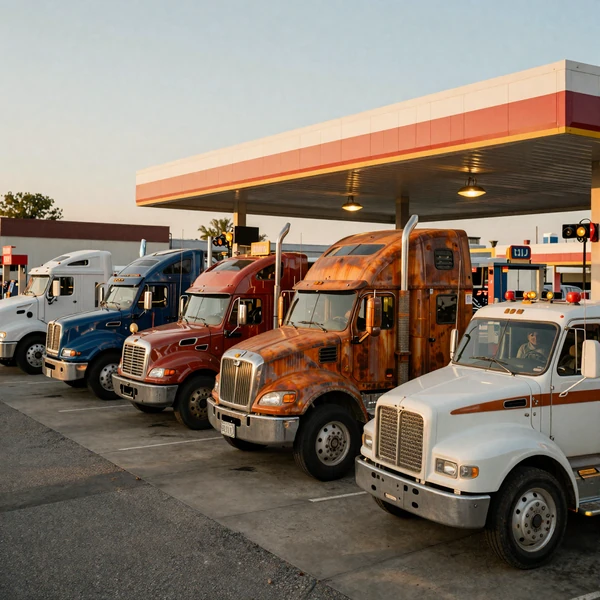
It's 11:47 p.m. at a Pilot off I-40. The engine's ticking down, the lot is full, and the cab feels smaller than it did this morning. If that sounds familiar, this one's for you - and for the thousands of single truckers feeling the exact same thing tonight.
Coffee's on. Pull in.
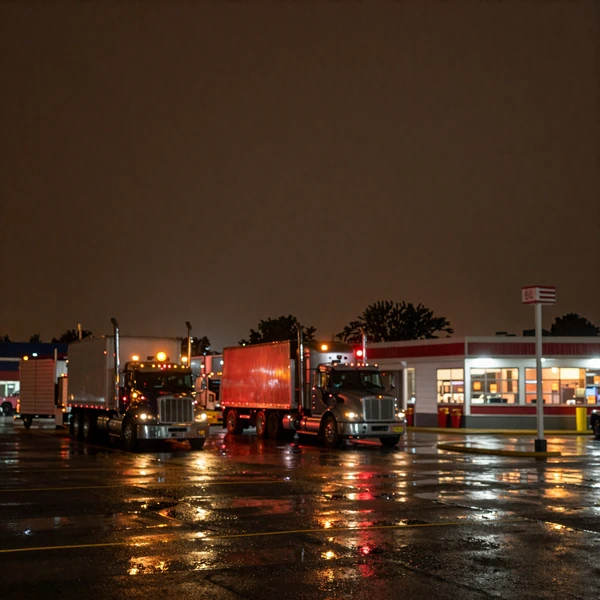
Truck stop loneliness is real, and it's not weakness. It's the predictable result of spending 18 to 22 days a month inside a 70-square-foot sleeper berth, parked alongside 200 other drivers who are doing the exact same thing - alone. A 2025 American Trucking Association wellness survey found that 64% of OTR drivers report frequent or chronic loneliness, more than double the U.S. adult average of 28% (Cigna Loneliness Index, 2024).
The shape of it is specific. It's not loud. It's the moment after the engine quiets and the lot noise becomes background. It's the half-eaten gas-station sandwich on the dash. It's scrolling through a phone that has 400 contacts and nobody to text at 11:47 p.m. on a Tuesday. Drivers describe it the same way across every forum on Reddit's r/Truckers - a quiet weight that settles around the third or fourth night out.
If the loneliness has tipped into something heavier - hopelessness, persistent exhaustion that sleep doesn't fix, thoughts of hurting yourself - please call or text the 988 Suicide & Crisis Lifeline. It is free, confidential, and answered 24/7 by people who understand shift work. This article is about connection. That call is about staying.
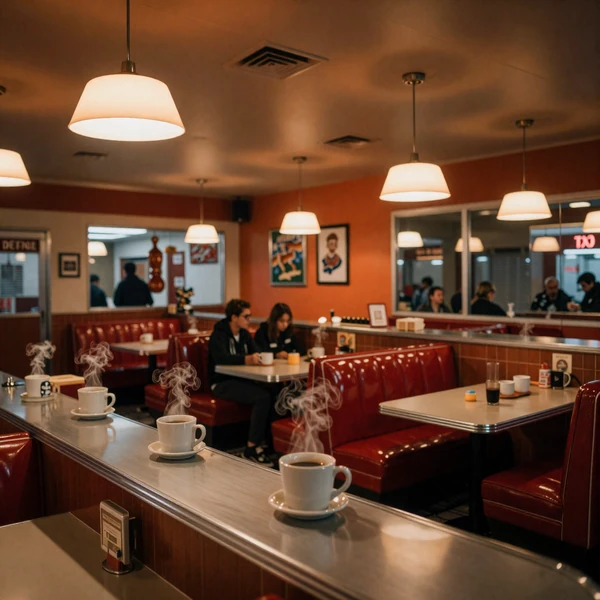
For decades, the response was the same: walk into the diner, sit at the counter, hope someone strikes up a conversation. That worked when truck stops had 30 spots and the same drivers cycled through every week. At a modern Pilot Flying J with 250 spaces and a constant rotation, the counter is full of strangers who'll be 600 miles east by tomorrow. The geography of truck stop romance changed. The need didn't.
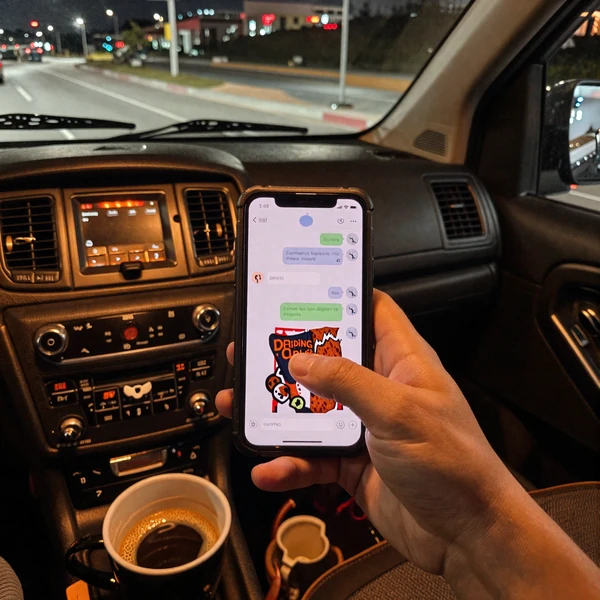
The smartphone in your cup holder did something the CB radio could only hint at - it made the lot social again, but in a wider radius. CB still works channel-by-channel within a mile or two. A modern trucker dating platform connects you to drivers and partners across an entire corridor at the same time.
The shift isn't just bigger. It's softer. Where the CB asked you to put yourself on broadcast with a handle and a one-liner, a profile-based app lets you read three sentences about another person before you ever say hello. That matters for tired drivers who don't have the energy for cold openings. It also matters for women considering road life - they get to know who you are before deciding to reply.
And the practical pieces caught up. Photos load on weak 4G. Verification flags catfishing before it costs you. Route filters mean the woman you're chatting with might actually be in Little Rock when you roll through Thursday. The technology finally fits the lifestyle.
The single most-used feature on LoveMy isn't the messaging system. It's a small map that answers one quiet question: who else is here right now?
When you park, a quick check-in puts a discreet pin on the map. Other LoveMy members within a 25-mile radius see your handle on a list - never your exact stall. Privacy stays in your hands; presence becomes optional, not exposed.
The list resets at sunrise. You're not building a permanent profile of your stops - you're saying, just for tonight, I'm around if you want to talk. Truckers looking for love appreciate the no-pressure framing more than any other onboarding choice we tested.
Plug in tomorrow's drop and the route finder shows members along the corridor. She might be 200 miles down I-40 with a dinner break Thursday. Coincidence becomes geometry, and a lot of LoveMy first dates start exactly this way.
See the route finderA coffee chat request is the lowest-pressure first move on the platform. One tap. No clever opener required. It sends a small, friendly note: "I'd grab a coffee with you sometime - virtually tonight, or in person if our routes cross." That's it. No swipe. No game. No twelve-step funnel.
The reason it works is what it asks of nobody. There's no expectation of a date, no pressure to be witty at midnight, no obligation to match physical attractiveness with sparkling text. The request says one true thing - I'd enjoy hearing your voice over a mug - and lets the other person decide if that fits their evening.
I sent four coffee chat requests in two months. Two of them said no thanks, one became a friend who texts me on Sundays, and one is in my passenger seat right now headed to Branson. That math is fine with me.
The ritual side of it matters too. Drivers tell us they've started pairing it with the actual cup - pour the coffee at the lot, open the app, send the request, then read a few minutes while they wait. It's a small ceremony that turns a lonely 20 minutes into a deliberate pause. The platform is doing very little. The ritual is doing the rest.
Loneliness is a mental-health issue, not a personality flaw. The sooner the industry says that out loud, the sooner more drivers get what they need.
I drove OTR for eleven years before I admitted that some weeks I was running just to keep from sitting still with my own head. Talking to one person, every day, even five minutes - that's the difference between getting through and going under.

If you're struggling, the 988 Suicide & Crisis Lifeline is free, confidential, and 24/7. Truckers Against Trafficking and the Trucker Buddy program also maintain peer-support resources for drivers who'd rather talk to someone who's lived it.
LoveMy isn't a dating app pretending to be a community. It's a community that happens to also help people fall in love. Every design choice came from one question: what would make the parking lot feel less alone?
If you take one thing from this article, take this: the loneliness is real, it's common, and it doesn't have to be permanent. Three bars of signal, one honest message, and a willingness to send it - that's how most LoveMy stories start. Including the ones that end at a courthouse with rings.
It is extremely common and it is not just you. A 2025 American Trucking Association wellness survey found that 64% of OTR drivers report frequent or chronic loneliness, more than twice the U.S. adult average of 28% reported by the Cigna Loneliness Index. The structure of long-haul trucking - 18 to 22 nights a month away from home, irregular schedules, and parking lots full of strangers - produces isolation in even the most social drivers. Recognizing it as a predictable outcome of the job, not a personal failing, is the first step toward addressing it.
Who's Nearby Tonight is a discreet, opt-in feature that shows other LoveMy members within roughly 25 miles of your check-in for that night only. When you park, you tap once to check in. Your handle appears on a list - never your exact stall or live coordinates. The list clears at sunrise so you are not building a permanent map of your stops. It is designed for low-pressure connection: a coffee chat, a phone call, or simply knowing someone friendly is in the lot.
A coffee chat request is the lowest-pressure first message on LoveMy - a one-tap note that says "I would enjoy a coffee with you sometime, virtually tonight or in person if our routes cross." It removes the pressure of crafting a clever opener and signals friendly intent without expectation. Coffee chat requests are free forever for every verified member. We made that a permanent rule because the feature exists to fight isolation, and putting it behind a paywall would defeat the entire point.
If you are in crisis or having thoughts of hurting yourself, please call or text 988 - the U.S. Suicide & Crisis Lifeline. It is free, confidential, and answered 24 hours a day by people trained to support shift workers and drivers. For ongoing peer support, the Trucker Buddy program and Truckers Against Trafficking both maintain driver-led communities. Talking to someone who has lived the road, not just studied it, often makes the difference. You are not weak for needing that. You are smart for asking.