The Rolling Check-In
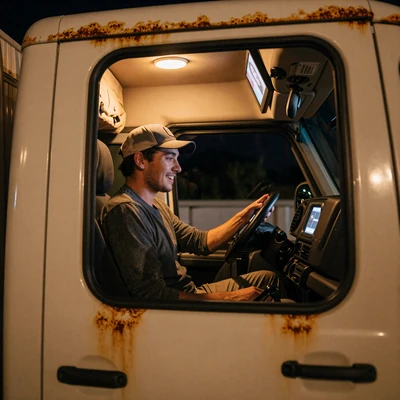
A two-word morning text - "rolling now" or "made Memphis" - tells your partner you're safe without breaking concentration. It's the smallest gesture and the most underrated one. Send it before you turn the key, every single day.
Falling for someone who lives in a Sleeper changes the rules. This is the warm, honest playbook nobody hands you when you start dating an over the road truck driver - written by road couples who figured it out the hard way.
Coffee's on - pull up a stool.

Dating a truck driver is not like dating someone with a 9-to-5 who happens to travel. It's a different rhythm entirely. He might be home for 36 hours, then gone for 18 days. She might be running team with a co-driver and only have signal in dispatch windows. The American Trucking Associations counts roughly 3.5 million professional truck drivers on U.S. roads in 2025, and the divorce rate in the industry runs notably higher than the national average - not because truckers are bad partners, but because most people enter the relationship without understanding the lifestyle.
Here's the thing: when you learn how to date a truck driver on their terms, you stop measuring the relationship against ordinary couples. You stop counting hours apart and start counting moments together. Owner-operators, OTR haulers, regional drivers, flatbed and tanker folks - every one of them is looking for the same thing most of us want: somebody who actually gets it. Somebody who won't sulk when dispatch reroutes them through Oklahoma instead of home. Somebody who texts "drive safe" instead of "where are you now?"
This guide isn't going to sugarcoat anything. We'll walk through the OTR schedule, the communication habits that actually work, how to make home time matter, how to build trust across a thousand miles, and what a first date looks like when one of you sleeps in a cab. Pour the coffee. Let's get into it.
Over-the-road drivers typically run two to four weeks out, followed by two to four days at home. Regional drivers may be home every weekend. Local drivers come home nightly. Before you fall hard for someone, you need to know which one you're dating - because the relationship math changes completely.
Federal Hours of Service (HOS) rules cap a driver at 11 hours behind the wheel within a 14-hour duty window, followed by a 10-hour rest break. That means his "evening" might start at 6 a.m. for you. His weekend might land on a Tuesday. Dispatch can reassign loads with hours of notice. None of this is personal - it's the job. The faster you internalize the schedule, the less every reroute feels like a betrayal.
When you understand how to balance a trucking schedule with a relationship, you stop fighting the clock and start working with it.
OTR (Over the Road): Long-haul drivers gone 2-4 weeks at a time.
Home Time: Scheduled days off - usually 2-4 days per trip out.
Deadhead: Driving with an empty trailer to the next pickup. Unpaid miles, often a sore subject.
HOS: Hours of Service - federal rules that dictate when he can drive, rest, and reset.
Hammer Down: Pushing hard to make a delivery. Translation: don't expect long replies.
Four-Wheeler: Anyone in a regular car. That's most of us.
Long phone calls aren't realistic when he's running hammer down through a Wyoming snow squall. The couples who last build small, sturdy rituals instead. Three of them work for almost everyone.
A two-word morning text - "rolling now" or "made Memphis" - tells your partner you're safe without breaking concentration. It's the smallest gesture and the most underrated one. Send it before you turn the key, every single day.
Reading a paragraph while merging onto I-35 is dangerous. Hearing it isn't. Voice notes let your driver listen on the road, smile at your tone, and reply when they're parked. Most couples find this single switch fixes 80% of "you never call me back" arguments.
Pick one fixed window - say, 7 p.m. Central after he shuts the rig down. Not nightly, not perfect, but reliable. A 20-minute call on the bunk with the curtain closed feels like coming home. Bonus: it gives him something to drive toward.
Don't be the partner who's always the one writing first, and don't be the one who waits three hours to reply just to "look busy." Both are exhausting on the road. Start a conversation with a quick story, a photo, or a question that actually needs an answer - then let the rhythm find itself.
The single biggest mistake new partners make is treating home time like a normal weekend. It isn't. He's spent 18 days sleeping six feet from the dashboard, eating gas-station chicken, and missing every birthday in the family group chat. The first 24 hours home are decompression, not a project list.
Home time isn't a weekend. It's a small holiday. Treat it like one and the rest of the road gets easier to bear.
Practical tips that work for road couples: pick one anchor activity per home time - a Sunday breakfast, a quiet drive, a porch evening - and protect it. Don't schedule dinners with both sides of the family in the same 48 hours. Stock the fridge before he rolls in so the first meal isn't a grocery run. And give him one slow morning of doing absolutely nothing. Sounds simple. Saves marriages.
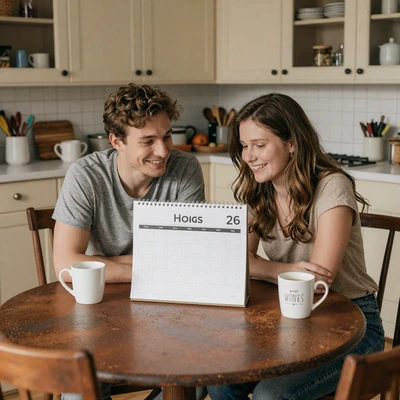
If you're new to this, maintaining the relationship during long hauls takes deliberate ritual. Couples on LoveMy share calendars, mark home-time blocks in advance, and treat dispatch updates as joint information - not just his problem.
Trust between road couples isn't built on grand gestures. It's built on the goodnight text that arrives every night without fail, the photo from a Love's parking lot at 4 a.m., the honest "I'm exhausted, can we talk tomorrow?" instead of pretending everything's fine. Predictability is romance when one of you lives in a moving office.
Jealousy is the second-biggest relationship killer in trucking, right after burnout. The fix isn't surveillance - it's transparency. Tell each other where you are, who you're parked next to, what the day looked like. Not because anyone's accused of anything, but because shared context replaces suspicion.
He sends me a polaroid from every state line he crosses. It started as a joke our first month dating - now I have a whole shoebox of them. That little ritual built more trust than a thousand "I love yous."

Forget reservations at 8 p.m. Saturday. A driver's window of opportunity might be a Tuesday morning in a town you've never visited. The best first dates are flexible, public, and short enough to fit between a fuel stop and a delivery.
A classic American diner on the way to his next pickup - pancakes, black coffee, neon sign in the window. Public, casual, and over in 45 minutes. The conversation flows when nobody is performing, and you both leave smelling like maple syrup.
Pilot Flying J, Love's, TA - most major stops now have proper sit-down cafés. Meeting where his rig is parked respects his schedule and saves him a deadhead. Order a coffee, walk the lot, and let the road culture set the tone.
More on truck stop romanceAfter 11 hours in the seat, his back hurts. A 30-minute walk at a state-park overlook or small-town main street stretches the spine and opens the conversation. Daylight, public space, easy exit - everything a safe first date should be.
If this guide hit home, these three are the natural next stops on your reading lot.
Yes, it can be harder than dating someone with a regular schedule - but it is not impossible, and millions of road couples make it work every year. The difficulty comes from time apart (often 2-4 weeks at a stretch for OTR drivers), unpredictable dispatch changes, and limited connectivity. The couples who succeed share three habits: realistic expectations, small daily communication rituals, and intentional home time. If you can adapt your rhythm to the schedule, the relationship can be more honest and grounded than most.
The first month is usually the hardest, mostly because you are still translating road life into your own calendar. You may feel ignored when he is actually in a no-signal canyon, or anxious when he sleeps through a planned call. Most road couples report that around the 60-90 day mark, the rhythm clicks and the relationship feels normal. The trick is to ask questions early, learn the lingo, and assume good faith when communication goes quiet.
Daily contact is the standard for healthy trucker relationships, but daily does not mean long conversations. A morning "rolling" text, a midday voice note, and a 10-20 minute call after he shuts the rig down covers most healthy patterns. Set a soft schedule together rather than demanding a fixed call time, and remember that some days he will be too exhausted to talk much. That is normal, not a red flag.
Avoid making him feel guilty for being on the road - it is his job and often his pride. Avoid surprise plans during home time without checking first. Avoid demanding instant replies, and avoid silent-treatment punishment when he goes quiet. Truckers regularly report that the deal-breakers in past relationships were not infidelity, but a partner who never tried to understand the lifestyle. Curiosity beats criticism every single time.
Generic dating apps like Tinder and Bumble are frustrating for CDL drivers because the swipe culture and full-signal expectations do not match road life. Trucker-focused platforms like LoveMy use route filters, low-bandwidth design, and verified profiles built for the lifestyle. You can also meet drivers organically at truck-stop cafés, diners along major freight corridors, and CDL community events - but for most people in 2026, a niche dating site is the fastest, safest path. Read more on the best dating apps for CDL drivers in our companion guide.